Home Nursing Services in India: Complete Guide for NRI Families
 India Roots
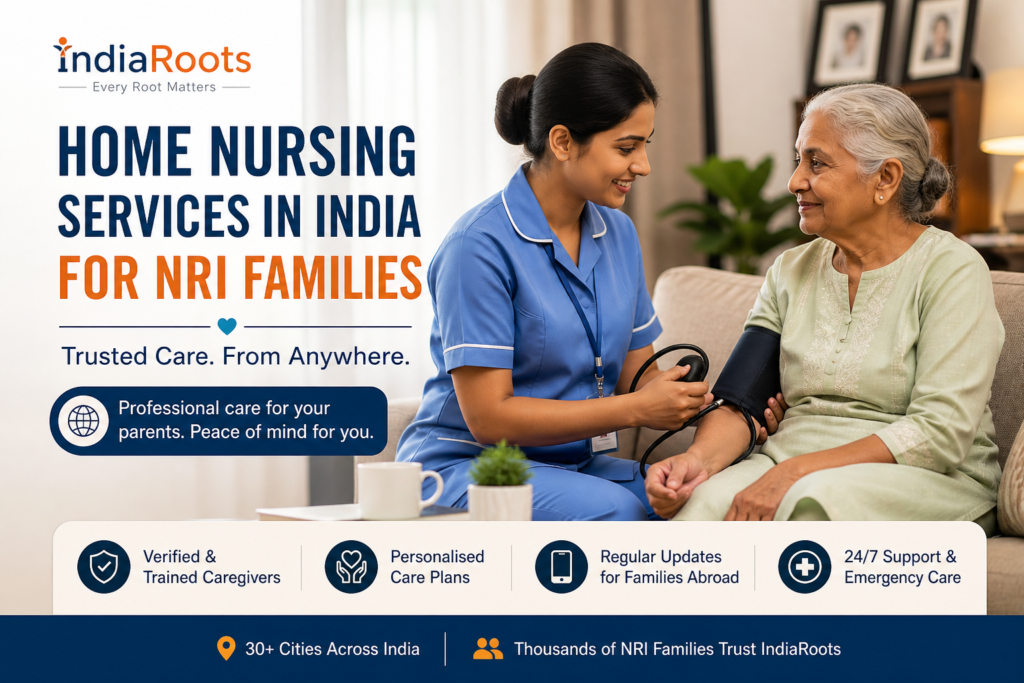
You’re thousands of kilometres away. Your mother just got discharged from hospital after a procedure. The doctor has given a list of instructions — wound care, medication schedule, physiotherapy exercises, dietary restrictions, follow-up appointments.
And you’re sitting in your apartment in Toronto, or London, or Melbourne, wondering how on earth all of that is going to happen reliably, every single day, when you can’t be there.
This is the reality for hundreds of thousands of NRI families every year. And it’s exactly the situation that home nursing services in India are designed to solve.
This guide covers everything you need to know — what home nursing actually includes, who it’s for, how to find a trustworthy provider, what it costs, and how to arrange everything from abroad.
What Are Home Nursing Services in India?
Home nursing services bring professional medical and personal care directly to your parents’ home — eliminating the need for long hospital stays or care facility admissions for conditions that can be managed in a familiar, comfortable environment.
A trained nurse or care attendant visits your parents at home — daily, twice daily, or on a live-in basis depending on need — and provides a range of services from medical monitoring to personal hygiene assistance to medication management.
For elderly parents in India, this model has several significant advantages over hospital-based or institutional care:
- Your parents remain in their own home, maintaining dignity and independence
- Recovery outcomes are often better in familiar surroundings
- The cost is substantially lower than extended hospital stays
- Family members — including those abroad — can stay closely informed
- Care is personalised to your parents’ specific needs rather than standardised to a ward routine
In India, home nursing services have grown significantly over the last decade, with trained, verified professionals now available across most major cities and increasingly in smaller towns as well.
Who Needs Home Nursing Services?
Home nursing is not only for those who are seriously ill. The range of situations it serves is much broader than most families realise.
Post-Hospitalisation Recovery After surgery, a serious illness, a fracture, or a cardiac event, patients require careful monitoring and support during recovery. This is perhaps the most common reason families arrange home nursing — ensuring that the discharge from hospital doesn’t mean the end of professional care.
Chronic Disease Management Parents with diabetes, hypertension, heart disease, kidney conditions, or respiratory illnesses need consistent monitoring — blood sugar checks, blood pressure tracking, medication adherence, dietary guidance. A visiting nurse ensures these aren’t missed.
Wound Care and Dressing Post-surgical wounds, diabetic ulcers, and pressure sores require regular professional cleaning and dressing. Doing this incorrectly — or not at all — can lead to serious infections.
Physiotherapy and Rehabilitation After a stroke, fracture, or joint replacement, structured physiotherapy is essential for recovery. Home-based physiotherapy is more comfortable and often more consistent than requiring the patient to travel to a clinic.
Palliative and End-of-Life Care For patients with serious illness who wish to remain at home, trained nurses provide pain management, comfort care, and emotional support — allowing families to spend meaningful time together without the clinical setting of a hospital.
Injections, IV Drips, and Catheter Care Many medical procedures that once required hospital visits can now be done at home by a trained nurse — insulin injections, IV antibiotics, catheter management, and more.
General Elderly Care and Assistance For elderly parents who are not acutely ill but need regular support with daily activities — bathing, grooming, mobility assistance, fall prevention — a care attendant provides vital daily help.
Types of Home Nursing Professionals in India
Understanding the difference between types of care providers helps you match the right person to your parents’ needs.
Registered Nurse (RN) A fully qualified nurse with a nursing degree (B.Sc Nursing or GNM — General Nursing and Midwifery). Capable of administering medications, managing wounds, monitoring vitals, handling medical equipment, and coordinating with doctors. Best suited for medically complex situations.
Nursing Assistant / Care Attendant Trained in basic personal care — bathing, grooming, feeding, mobility assistance, and companionship. Not qualified to administer medications or perform clinical procedures independently. Best for daily personal care and support.
Physiotherapist A trained rehabilitation specialist who works on mobility, strength, balance, and pain management. Essential after fractures, strokes, or joint surgeries.
Trained Caregiver (Geriatric Focus) Professionals specifically trained in elder care — understanding the physical, cognitive, and emotional needs of ageing individuals. IndiaRoots caregivers, for example, undergo dedicated geriatric care training.
For most elderly parents, the right solution is a combination — a trained caregiver for daily support, with access to a registered nurse for clinical needs and a physiotherapist when required. A good elder care service will help you build that combination rather than selling you a single one-size solution.
What Home Nursing Services Typically Include
A comprehensive home nursing arrangement for elderly parents in India will generally cover the following:
Medical Monitoring
- Vital signs checking — blood pressure, pulse, oxygen levels, temperature
- Blood sugar monitoring for diabetic patients
- Weight monitoring and fluid intake tracking
- Reporting changes to the attending doctor
Medication Management
- Administering oral medications on schedule
- Injections (insulin, vitamin B12, and others as prescribed)
- IV drip administration where required
- Ensuring prescriptions are refilled before they run out
Wound and Skin Care
- Cleaning and dressing post-surgical wounds
- Pressure sore prevention and management
- Catheter care and hygiene
Personal Care Assistance
- Bathing, grooming, oral hygiene
- Dressing and undressing
- Toileting and continence care
- Mobility assistance and transfer support (bed to chair, etc.)
Physiotherapy Support
- Range-of-motion exercises
- Strength and balance training
- Post-stroke rehabilitation
- Fall prevention exercises
Nutrition and Feeding Support
- Meal preparation assistance
- Feeding support for those with swallowing difficulties
- Monitoring dietary restrictions
Emotional and Companionship Support
- Conversation and engagement
- Mental stimulation activities
- Emotional reassurance, particularly for patients recovering from serious illness
Coordination and Reporting
- Regular updates to family members abroad
- Communication with the treating doctor
- Coordination of follow-up appointments
How to Arrange Home Nursing Services From Abroad
This is where many NRI families feel most uncertain. How do you arrange professional care for your parents when you’re not there to supervise, evaluate, and manage?
Here is a practical step-by-step approach:
Step 1: Assess Your Parents’ Needs Clearly Before contacting any service, spend time understanding what your parents actually need. Is this post-hospitalisation support? Ongoing chronic disease management? Daily personal care? The clearer you are, the better a care plan you’ll get.
Step 2: Choose a Service That Specialises in NRI Families Not all home nursing services are designed for remote management. Look specifically for providers who have experience working with NRI families — those who offer regular WhatsApp updates, video reports, real-time emergency alerts, and a dedicated coordinator you can reach directly across time zones.
Step 3: Verify Caregiver Credentials Ask directly: Are your nurses registered? Are attendants trained? Are background checks conducted? A reputable service will answer these questions clearly and confidently. If they’re vague or evasive, look elsewhere.
Step 4: Request a Needs Assessment Visit Before care begins, a good provider will visit your parents, speak with them, review their medical history and current prescriptions, assess the home environment, and build a care plan. This visit is essential — it’s how personalised care actually starts.
Step 5: Establish Communication Protocols Agree upfront on how and when you’ll receive updates. Daily check-in messages? Weekly video reports? Immediate alerts for any health change or emergency? Get this in writing so there’s no ambiguity.
Step 6: Stay Involved Professional home nursing is not a set-and-forget arrangement. Stay engaged. Ask questions. Review health reports. Speak with the coordinator regularly. Your involvement — even from abroad — makes a real difference to the quality of care your parents receive.
What to Look for When Choosing a Home Nursing Provider in India
With the growth of the elder care sector in India, there are now many providers — ranging from excellent to deeply unreliable. Here’s how to separate the two:
Caregiver Verification and Training Ask specifically about background verification, nursing qualifications, geriatric training, and ongoing supervision. The best providers train, supervise, and regularly evaluate their caregivers rather than simply placing individuals.
Dedicated Care Coordinator You should have one consistent point of contact — a person who knows your parents, manages the care plan, and is reachable by you directly. Services that route every query through a generic call centre are not built for genuine elder care relationships.
Transparent Pricing Costs should be clear, itemised, and communicated upfront. Be cautious of services that are vague about pricing until you’ve committed, or that add unexpected charges after care begins.
NRI-Specific Communication Regular updates in formats that work across time zones — WhatsApp messages, video reports, documented health logs. If a service doesn’t proactively mention how they communicate with families abroad, that tells you something.
Emergency Response Protocol Ask directly: if my parent has a medical emergency at 2am, what happens? A serious provider will have a clear answer — an on-call team, a hospital coordination process, and an immediate notification system for family members abroad.
Reviews and References From NRI Families Ask for testimonials or references specifically from families who managed care remotely. Their experience is the most relevant indicator of what your experience will be.
Home Nursing Costs in India: What to Expect
Home nursing costs in India vary significantly based on the level of care, the city, the duration, and the provider. Here is a general range to help you plan:
These are indicative figures. Actual costs depend on your parents’ specific city, the level of care required, and the provider. A reputable service will give you a transparent quote after completing a needs assessment.
For NRI families comparing these costs against equivalent services in the US, UK, Canada, or Australia — professional elder care in India represents extraordinary value. Home nursing in the US, for example, can cost $25–$35 per hour. The same level of care in India costs a fraction of that.
How IndiaRoots Handles Home Nursing for NRI Families
At IndiaRoots, home nursing is one part of a broader care system — not a standalone service.
When a family contacts us about nursing support, here is what happens:
A dedicated care coordinator visits your parents in person, reviews their medical history and current needs, assesses the home environment, and builds a personalised care plan. This plan is shared with you for review and approval before anything begins.
Caregivers and nurses assigned to your parents are background-verified, trained in geriatric care, and supervised regularly. You are not left to assess them yourself.
You receive regular updates via WhatsApp — daily check-ins, weekly health summaries, and immediate alerts if anything changes. A video call with your parents and the coordinator can be arranged at any time.
If a medical emergency arises, our on-ground team responds immediately — coordinating hospital admission if required and keeping you informed in real time throughout.
And because we cover 30+ cities across India, this level of care is available whether your parents are in Delhi, Chennai, Pune, Jaipur, Lucknow, or a growing number of smaller cities.
Home nursing services in India have come a long way. For NRI families managing parents’ health from abroad, they represent one of the most important investments you can make — not just in your parents’ physical recovery and wellbeing, but in your own peace of mind.
The key is choosing the right provider: one that is transparent, verified, responsive, and built specifically to serve families like yours.
Your parents deserve professional, dignified care in the comfort of their own home. And you deserve to know — really know — that they’re getting it.
At IndiaRoots, that is exactly what we deliver.
Frequently Asked Questions
Can I arrange home nursing services in India for my parents without being physically present?
Yes. You can arrange home nursing services in India for your parents entirely from abroad. Contact a provider like IndiaRoots via call or WhatsApp, share your parents’ details and medical history, and the care team will visit your parents, assess their needs, and begin care without you needing to be present in India.
What is the difference between a registered nurse and a care attendant in India?
A registered nurse (RN) is a qualified medical professional who can administer medications, manage wounds, and monitor vitals. A care attendant provides personal support such as bathing, grooming, and mobility assistance but cannot perform clinical tasks. Most elderly parents need a combination of both depending on their medical condition and daily care requirements.
How do I verify that a home nurse in India is trustworthy and properly trained?
To verify a home nurse in India, ask the provider for proof of nursing qualifications, background verification records, and details of their caregiver training programme. A reliable elder care service like IndiaRoots conducts background checks, verifies nursing credentials, and provides ongoing supervision — so families do not have to assess caregivers themselves.
How quickly can home nursing be arranged in India after hospital discharge?
Home nursing in India can typically be arranged within 24 to 48 hours of a request. For urgent post-hospitalisation cases, share the discharge summary, current medications, and doctor’s instructions as early as possible so the care team can begin promptly without delay.
Is home nursing in India safe for serious medical conditions?
Yes. Home nursing in India is safe for serious medical conditions when provided by a verified and professional service. Trained registered nurses in India can manage post-surgical recovery, chronic disease monitoring, wound care, IV administration, and catheter care at home. For many patients, recovery outcomes are better at home than in a clinical setting due to the comfort of familiar surroundings.
Need home nursing support for your parents in India? Contact IndiaRoots for a free consultation. We’ll assess your parents’ needs, explain your options, and build a care plan that gives everyone — your parents and you — genuine peace of mind.

India Roots
Author at MindGridTech
Need help with your technology?
Get a free 30-minute consultation with our team — no commitment required.
Get a Free Quote →